Hello guys, if you want to learn REST Assured tool for testing your API and RESTful Web services and looking for the best online courses to learn REST Assured then you have come to the right place. In the past, I have shared the best online courses to learn various REST API development tools like Postman, SoapUI, and Selenium, and today, I am going to share the best REST Assured courses to learn this useful tool in 2027. These are the best resource I can find to learn REST assured, particularly when it comes to choosing online courses and they are from popular online platforms like Udemy and Pluralsight. You can join one or two of these courses to master this excellent tool to automate your REST API Testing.
Tuesday, October 13, 2026

Thursday, October 8, 2026
I Tried 30+ Java and Spring Boot RESTful Web Services in Java - Here Are My Top 5 Recommendations for 2027
In the last article, I have shared some courses to learn Microservice development with the Spring framework, and today, I'll talk about RESTful web service developments. The REST API and RESTful Web Services need no introduction, it's everywhere now and driving a new internet revolution. Most of the software development in the web space now also involves REST APIs. Gone are the days where the only interface for a web application was the browser, now most of them support REST APIs, which allows them to be accessible on any device like mobile devices, tablets, apple watches, and any other digital gadgets. It doesn't matter whether you are working for software giants like Amazon, Facebook, or Google or working with startups like Uber or Netflix, REST APIs are everywhere.
Saturday, October 3, 2026
Top 5 Udemy Courses to Learn Swagger or Open API for Beginners in 2027 - Best of Lot
Hello guys, if you want to learn Swagger and looking for the best online courses then you have come to the right place. In the past, I have shared the best REST API courses as well best Postman courses, one of the best tools to test REST API and in this article, I am going to share the best online courses to learn Swagger in 2027. I have curated this list from my favorite online learning platform like Udemy, Pluralsight, and Coursera and they are suitable for both beginners and intermediate developers who want to master the Swagger tool. But before we jump into these courses Let us start with the simple stuff first. What exactly is Swagger and Open API?
Top 5 Udemy Courses to Learn API Development (REST, SOAP, Web) in 2027 - Best of Lot
Hello guys, if you want to learn API development and looking for the best
resources like online courses, training classes, and tutorials then you have
come to the right place. Earlier, I have shared the
best courses to learn Spring
and
RESTful web services
and in this article, I am going to share online courses to learn API
development. Application Programming Interface, commonly known as API is used as
a source of communication between applications. By using API, features, or
services of an application can be used in another application. API development
has become an integral part of modern application development. Today, a
full-fledged application is incomplete without APIs.
There is a huge demand for skilled API developers. APIs can be developed using different languages such as JavaScript and Java. Understanding API and its working is a bit complicated, especially for beginners. There are different types of APIs, RESTfull and SOAP being the most popular.
This article will list the top five courses that will help you understand and learn different types of APIs and API development. These are the best courses from sites like Coursera, Udemy, and Pluralsight and were created by experts like Bharat Thippireddy.
I have also included online courses to learn API development with Python,
JavaScript, and Java programming language, the big 3 of app development
programming languages.
You can join the course which is most suitable for you
in terms of your experience with any of these programming languages.

5 Best Udemy Courses to learn API Development in 2027
Without wasting any more of your time, here is a list of the best online
courses you can join to learn API development in 2027. These are the best
courses from Udemy, Coursera, and Pluralsight to learn API development like
REST API, SOAP APIs as well Web API.
This is a long course with total video content of seventeen hours. It is a beginner-level course but at the same time, it's also the best and most comprehensive course to learn API and web service development in Java.
Requirements
Basic knowledge of Java
Here is the link to join this REST API course - Java Web Services
1. Java Web Services - Udemy
Another best-seller at Udemy, this course is for those individuals who want to learn web services and API development in Java. In this course, the instructor explains to design and develop both SOAP and REST APIs from scratch. Everything in this course is covered in detail.This is a long course with total video content of seventeen hours. It is a beginner-level course but at the same time, it's also the best and most comprehensive course to learn API and web service development in Java.
Requirements
Basic knowledge of Java
Here is the link to join this REST API course - Java Web Services
2. REST APIs with Flask and Python - Udemy
If you want to learn REST API development using python, then this course is the best choice. It is a best-selling API development course at udemy. In this course, the instructor focuses on building REST APIs using the popular programming language Python.
Moreover, along with Python, the instructor also uses the Flask framework,
which is a great minimal web development framework to learn for Python
developers.
You will learn how to create REST APIS, connect applications (both web and
mobile) with databases and servers, authentication, etc. The total video
content of this course is seventeen hours and this is a beginner-level
course.
Requirements
Basic knowledge of Python.
Requirements
Basic knowledge of Python.
Here is the link to join this course - REST APIs with Flask and Python

3. Web Services/Rest API Testing with SoapUI +Real time Projects - Udemy
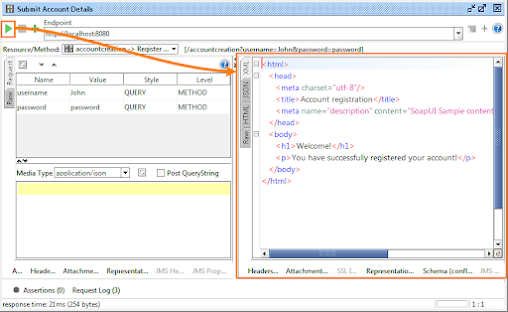
This course is the best-selling API automation course at Udemy. The instructor nicely explains the meaning of API, web services, and the difference between them in this course. The main focus of this course is testing REST API using the SoapUI.
The instructor explains the different types of automation that can be
performed on the REST API throughout this course. This is a long course
with total video content of nineteen hours. It is a beginner-level
course.
Requirements
Basic knowledge of API is recommended (optional)
Here is the link to join this course - Web Services/Rest API Testing with SoapUI +Real time Projects
It is a beginner-level course with total video content of two hours.
Requirements
Basic knowledge of API is recommended (optional)
Requirements
Basic knowledge of API is recommended (optional)
Here is the link to join this course - Web Services/Rest API Testing with SoapUI +Real time Projects
4. Server-side Development with NodeJS, Express, and MongoDB - Coursera
This is the best-selling API development course at Coursera. It is a part of a full-stack specialization. In this course, the instructor deals with server-side development using Node.js, Express, and MongoDB. The main focus of this course is developing REST APIs using JavaScript.
It is an excellent course because these three technologies (Node.js,
Express, MongoDB) are the main parts of the popular MEAN and MERN stacks. This is an intermediate-level course.
Requirements
Basic knowledge of JavaScript.
Requirements
Basic knowledge of JavaScript.
By the way, instead of joining these courses and specialization
individually, you can also join the
Coursera Plus, a subscription plan from Coursera which gives you unlimited access
to their most popular courses, specialization, professional
certificate, and guided projects for just $59 per month on the annual
plan.
5. Designing RESTful Web APIs - Pluralsight
Pluralsight has a few excellent courses dedicated to API development. This course is the most popular API development course at Pluralsight. In this course, you will learn how to create RESTful APIs for the web and mobile. The instructor explains very nicely what is a REST API and how they are used.It is a beginner-level course with total video content of two hours.
Requirements
Basic knowledge of API is recommended (optional)
By the way, you would need a Pluralsight membership to join this
course which costs around $29 per month or $299 per year (14%
discount).
I highly recommend this subscription to all programmers
as it provides instant access to more than 7000+ online courses to
learn any tech skill. Alternatively, you can also use their
10-day-free-trial
to watch this course for FREE.

That's all about the best API development courses for beginners on Udemy in 2027. As mentioned earlier, API development is an important part of modern application development. In this article, we listed five selected courses for those individuals who want to understand API development.
Thanks for reading this article so far. If you like these best API Development courses, then please share them with your friends and colleagues. If you have any questions or feedback, then please drop a note.
That's all about the best API development courses for beginners on Udemy in 2027. As mentioned earlier, API development is an important part of modern application development. In this article, we listed five selected courses for those individuals who want to understand API development.
These courses are carefully selected from the top
educational websites such as Udemy and Coursera. Go through each
of them and choose according to your requirements.
Other Programming Resource articles you may like to explore
- 10 Advanced Java Courses to learn in 2027
- 5 Free Spring Framework Courses for Java Developers
- Top 5 Courses to Learn Microservices with Spring Boot
- 10 courses for Programming/Coding Job Interviews
- Top 5 Courses to learn Spring in Depth
- 5 Online Courses to learn Core Java for Free
- Top 5 Java design patterns courses for experienced Java devs
- 10 Advanced Spring Boot Courses for Java developers
- Top 5 Courses to learn Spring Cloud for Beginners
- 5 Courses to Learn Web Development in 2027
- Top 5 Courses to learn Regular Expression
- Top 7 Courses to learn Microservices in Java
- 5 Courses to learn Shell Scripting in Linux
- 10 Free Spring Boot Tutorials and Courses for Java Devs
Thanks for reading this article so far. If you like these best API Development courses, then please share them with your friends and colleagues. If you have any questions or feedback, then please drop a note.
P. S. - If you are new to web development and API
development and looking for some free online courses to start
learning REST API development with Java then you can also check
out this Spring REST API for Beginners [FREE]
course on Udemy to start with.
Wednesday, September 9, 2026
Why Spring Boot Makes REST APIs Easier in Java?
Hello guys, REST has now become a standard way to develop web services and when it comes to Java, there are many frameworks and libraries available, e.g. JAX-RS, Restlet, Jersey, RESTEasy, Apache CFX etc., but I encourage Java developers to use Spring MVC to develop RESTful web services.
Some of you might ask, why use Spring MVC Framework to develop RESTful web services in Java? What are the advantages, and why is it better than other frameworks and libraries available out there?
Well, the most important reason, I think, to use Spring for developing RESTful web service is that you can use your Spring MVC experience for developing RESTful web services and you don’t need to learn a new framework or library, which means you can quickly roll out your REST API.
This is one of the biggest advantages, i.e. leveraging your years of experience on Spring MVC to expose your application as REST APIs.
Another reason is that Spring has excellent support for developing RESTful web services.
In the last couple of versions, starting from Spring version 3.0, it has provided a lot of enhancements to Spring MVC to provide first-class REST support. It has provided dedicated annotations, e.g. @RestController and @ResponseStatus to make the development of RESTful resources even easier in Spring 4.0.
It’s also not only help you to create RESTful web services but also provides classes to consume REST resources, like you can use the RestTemplate class to consume RESTful resources.
There are many more utility classes and annotations which make the development of RESTful web services in Spring easier and seamless and I’ll share a couple of them in this article to prove my point that using Spring to develop RESTful Web service is the right decision.
By the way, before you start with the RESTful web services using Spring Framework, you must know how to use Spring framework and key Spring theory and principles like dependency injection and spring eco-systems and libraries.
If you are new to Spring, you should first start with a course like [NEW] Spring Boot 3, Spring 6 & Hibernate for Beginners by Chad Darby to learn not just Spring but also Spring Boot and HIbernate, this will help you a lot for REST based development in Java and Spring.

7 Reasons to Use Spring for Creating RESTful Web Services in Java
As I told you in the first paragraph, we can use Spring MVC to create and consume RESTful web services. Now, let’s see those supports in a little bit more details so that you can make the best use of them and quickly develop the RESTful services you always wanted.
1. In built support to handle HTTP methods
In Spring MVC, a controller can handle the requests for all HTTP methods, which is a backbone of RESTful web services. For example, you can handle a GET method to perform read operations, POST methods to create resources, PUT methods to update resources, and DELETE methods to remove resources from the server.
From Spring 3.2 onwards, you can also handle PATCH requests. By the way, if you are not familiar with the Spring MVC framework, then you should first take a look at that; Spring MVC For Beginners is a good place to begin.

2. Automatic JSON to Java Object Conversion and vice-versa
In the case of REST, the representation of data is very important and that’s why Spring MVC allows you to bypass View-based rendering altogether by using the @ResponseBody annotation and various HttpMessgeConverter implementations.
By using this, you can directly send a response to a client, e.g. the resource clients want and also in the format they want. See here to learn more about HttpMessageConvert and @ResponseBody annotation.

3. Dedicated REST Annotations support
The Spring 4.0 release added a dedicated annotation, @RestController, to make the development of RESTful web services even easier.
If you annotate your controller class using @RestController instead of @Controller then Spring applies message conversations to all handler methods in the controller.
This means you don’t need to annotate each method with the @ResponseBody annotation. This also makes your code much cleaner.
4. Easy to Extract Information from REquest and PAth
One of the main differences between a REST web service and a normal web application is that the REST pass resource identifies data in the URI itself, e.g. /messages/101, while web applications normally use a query parameter, e.g. /messages?Id=101.
If you remember, we use @RequestParam to get the value of those query parameters but, not to worry, Spring MVC also provides a @PathVariable annotation which can extract data from a URL. It allows the controller to handle requests for parameterized URLs.
5. Multiple View Support
Another key aspect of RESTful web services is Representation, meaning the same resource can be represented in different formats, i.e. JSON, XML, HTML, etc. Thankfully, Spring provides several view implementations and views resolvers to render data as JSON, XML, and HTML.
For example, ContentNegotiatingViewResolver can look at the file extension of requests or Accept header to find out the correct representation of a resource for the client.
6. Automatic Response conversion
Similar to the @ResponseBody annotation, which is used for converting the response to the format client wants (by using HttpMessageConverts), Spring MVC also provides @RequestBody annotation, which uses HttpMethodConverter implementations to convert inbound HTTP data into Java objects passed into a controller's handler method.
If you are not familiar with handler methods and Spring MVC in general, then you can also check out 3 ways to learn Spring MVC.

7. Utility Template classes
The Spring framework also provides a template class, RestTemplate, which is similar to JdbcTemplate, and JmsTemplate, which can consume REST resources. You can use this class to test your RESTful web service or develop REST clients.
These were some of the important features of the Spring MVC framework which assist in developing RESTful web services. As I said earlier, the most important reason for me to choose Spring for developing RESTful resources is that I can use my existing knowledge of the framework, which means no steep learning curve.
If you look at it from a high level, developing RESTful services is not very different from developing a web application.
The fundamental difference is that in the case of the former, we mostly deal with human users where in case of REST you have to deal with non-human users, mostly rich JavaScript clients and mobile applications.
This key difference then causes other differences, like representing data in JSON or XML instead of HTML which is suitable for human users but not for non-human systems. If you want to learn more before starting developing production level RESTful web services using Spring, REST with Spring course is a good place to start.
Other Spring and REST Resources you may like
How to build Microservices with Spring Cloud?
Microservices With Spring Boot and Spring Cloud
Difference between Restlet, Jersey, and RESTEasy in Java?
What is the use of DispatcherServlet in Spring MVC?
How to enable Spring security in a Java web application?
Spring in Action by Craig Walls
Spring Framework 5: Beginner to Guru
My favorite courses to learn Spring Boot in Depth
My favorite courses to learn WebFlux and Reactive Spring
Thanks for reading this article, if you like these reasons for developing RESTful web services using Spring then please share with your friends and colleagues. If you have any questions or feedback, then please drop a note.
P. S. — If you want to learn Spring MVC in depth and need course then I also suggest you to join Spring Framework : Beginner to Guru course on Udemy. It’s a great course to start with.
Wednesday, October 8, 2025
Top 5 Books to learn REST and RESTful WebServices for Java Programmers in 2025
The REST framework has now become the standard way to develop Web Services on the Internet. It's no more SOAP, who used to rule the world for the last two decades. The SOAP and XML went very well together in the past decade but it seems now REST and JSON have overtaken them and doing even better, thanks to the rise of JavaScript for both frontend and backend development. Since Java is also one of the most popular languages to develop backend services, there is a lot of demand for Java developers who know web services and can implement and expose existing SOAP-based services into REST style, light-weight web services.
Wednesday, March 12, 2025
Top 5 Udemy Courses to Learn GraphQL for Beginners in 2025 - Best of Lot
If you are a full-stack web developer then you might have heard about GraphQL, another exciting technology. GraphQL is gaining a lot of popularity because of its superiority over traditional REST APIs. Many big companies like Facebook, Coursera, Github, and Yelp have already started using it, which has also helped a lot in terms of gaining popularity. There is a good chance that you might have already have heard about GraphQL in blogs pots, on Medium, or, in general, Web, but like many others, not sure whether it's worth learning or not, and if yes, from where to start. Well, I have been learning GraphQL since last week, and I would like to share some of the resources I have been using for my learning.
Friday, February 21, 2025
Top 5 Udemy Courses to Learn SoapUI REST Testing tool in 2025 - Best of Lot
Hello friends, if you want to learn SoapUI a looking for the best resources like
online courses and books then you have come to the right place. In the past, I
have shared the best
books and
courses to learn RESTful Web Services, both REST and SOAP, and today we are gonna take
a look at the best available SoapUI courses online. If you have developed any
public or private API then you may have faced challenges about testing your API,
both pre and post-release as well as automating common test scenarios. While
there are a lot tool tools like
Postman, RESTAsssured, and a few others, SoapUI is one of the best tools for testing
APIs and automating tests cases.
Thursday, January 16, 2025
Top 5 Tools for Testing REST APIs and RESTful Web Services in 2025 - Best of Lot
Hello guys, If you are a Java or web developer working on REST APIs and RESTful web services and looking for some tools to test your APIs and web services then you have come to the right place. Earlier, I have shared the best books and courses for RESTful web services and in this article, I am going to share five awesome but easily accessible and free tools to test your REST APIs. These REST API testing tools will help you to test your APIs as you build, starting from unit testing to integration testing and then fully automating your resting to create a regression pack. You can also use these tools to interact with your REST API during the development phase for quick tests.
Thursday, June 6, 2024
How to version REST API? URL vs Header Versioning? Example Tutorial
Designing a real world, industry standard RESTful API can be a tricky challenge becuase there is no real standard exists. To add into that, there is also a lot of confusing topics e.g. PUT vs POST for creating and updating resources, or using URL or Header for versioning. There are a lot of advices you will find on internet often confusing and advocating one or other alternative, but it ultimately depends upon your own wisdom and use cases to come up with elegant RESTful URIs, which supports both filtering and versioning. There are both pros and cons of URL versioning and Hypermedia version, which we'll discuss in this article, but the most important lesson to learn is that you should always version your REST API.
Tuesday, May 14, 2024
Top 20 Spring and REST Interview Questions Answers for Java/JEE Programmers
Hello guys, I have been sharing a lot of REST with Spring tutorials from last a couple of weeks and today, I am going to share some of the frequently asked Spring and REST interview questions to Java developers applying for Web developer roles. Since Spring Framework is the most popular and the standard framework for developing Java web application and RESTful Web Services, a solid knowledge of Spring core and Spring MVC is expected from any senior Java developer, but if the job description mention about REST and Web Services, you also need to be aware of how to develop RESTful Web Services using Spring Framework?.
Sunday, May 12, 2024
How to POST JSON request from Linux to test RESTful Web Services? Example
Even though, Postman is a great tool and chrome plugin to test RESTful Web services for Java developers, I often find myself using "curl" or "cURL" command in Linux for testing RESTful Web Services, particularly Java web services built using Spring or Spring Boot framework. The curl command is easily available on most of Linux hosts and you just need to type a command to sent various types of HTTP requests to your application from Linux command line, as shown here. Though, many RESTful web developer and tester knows this trick, they mainly use GET request to access data from web service and many of them struggle to send HTTP POST request containing JSON data to create new resources.
Thursday, May 9, 2024
How to Consume JSON from RESTful Web Service and Convert to Java Object - Spring RestTemplate Example
So far, I have not written much about REST and RESTful web service, barring some interview questions like REST vs. SOAP, which is thankfully very much appreciated by my readers, and some general suggestions about the best books to learn REST and best REST courses in the past. Today I am going to write something about how to consume JSON from a RESTful Web Service in Java using Spring Framework? I will also talk about how to convert the JSON to Java objects using Jackson. You will also learn about the RESTTemplate class from the Spring MVC framework, and how you can use it to create a REST client in Java in just a few lines of code.
Monday, May 6, 2024
How to set an "Accept:" header on Spring RestTemplate request? Example Tutorial
Hello Java programmers, if you have been using Spring for REST API development, both creation and consumption then you know that RestTemplate is one of the most commonly used tools for REST service invocations. So one of the major problems you might have in this RestTemplate is that how to set an "Accept" header on Spring RestTemplate request. In the last article, I have shown you how to POST and Consume JSON using RestTemplate in a Spring Based Java application and In this tutorial, we will go through some important points on how to add headers to RestTemplate and fix the errors related to them.
Friday, April 19, 2024
Differences between @RequestParam and @PathVariable annotations in Spring MVC?
The Spring MVC framework, one of the most popular frameworks for developing a web application in Java world also provides several useful annotations to extract data from the incoming request and mapping the request to the controller, like @RequestMapping, @GetMapping, @RestController, @RequestParam, and @PathVariable. Even though both @RequestParam and @PathVariable are used to extract values from the HTTP request, there is a subtle difference between them, which makes them a useful question from a Spring Framework interview and spring certification point of view. We'll examine the subtle difference between @RequestParam and @PathVaraible in this article.
Monday, April 8, 2024
How to send HTTP request using curl and wget command from Linux and UNIX? Example Tutorial
You can use either curl or wget command to send HTTP requests from UNIX or Linux operating system. Both commands allow you to send GET and POST requests, which means you can also call REST web services. I have a Java web application, which runs on Linux and exposes WebServices. I was writing a UNIX script to download In some data from that web service when I hit by the question, how do I make an HTTP call from UNIX? What is the UNIX command should I use? If you are also facing the same problem, then you have come to the right ht place. Basically, you can use two UNIX commands to make the HTTP request, wget, and curl.
Thursday, March 14, 2024
Top 10 HTTP Status Code Every RESTful web Service Developer Should know
A good knowledge of HTTP protocol is must for a RESTful Web Service developer because REST uses HTTP principles and a good portion of its popularity is due to HTTP itself. One of the important part of HTTP is the status code, which gives useful information related to client request. They are also known as HTTP response code because they are sent in header on HTTP response by Server to indicate what happened with client's request. The status codes ranges from 100 to 500 but not all of them are valid and useful. Instead the first number e.g. 1xx or 2xxx denotes the class of status codes.
Monday, October 30, 2023
Why Java and Spring Developers Should Learn RESTful Web Services and Microservices
More and More companies are adopting Microservices architecture e.g. Uber and Netflix already uses it and many startups I know is choosing REST and MicroService as the standard way to build and provide their services. This is fueling the demand for programmers who can develop robust and scalable Microservices and RESTful Web Services. Since Java is one of the most popular language for developing backend, it is also benefiting from this trend. The demand for Java developers who knows Spring framework and understand how to build RESTful web services is huge and that's why it has become a key skill in Java application development job market.
Tuesday, September 12, 2023
Top 13 REST Web Services Framework Interview Questions Answers
Hello guys, today's world is about Microservices and REST architecture is the one which powers Microservices. REST web services have quickly become the defacto web services in the web development world and have almost replaced SOAP-based web services that rule the world before. With the growing use of REST APIs in web technology space REST is also becoming increasingly important on J2EE and other web development interviews and if you say you know web-service then be prepare for some REST concept related questions.
Subscribe to:
Posts
(
Atom
)


 Posts

